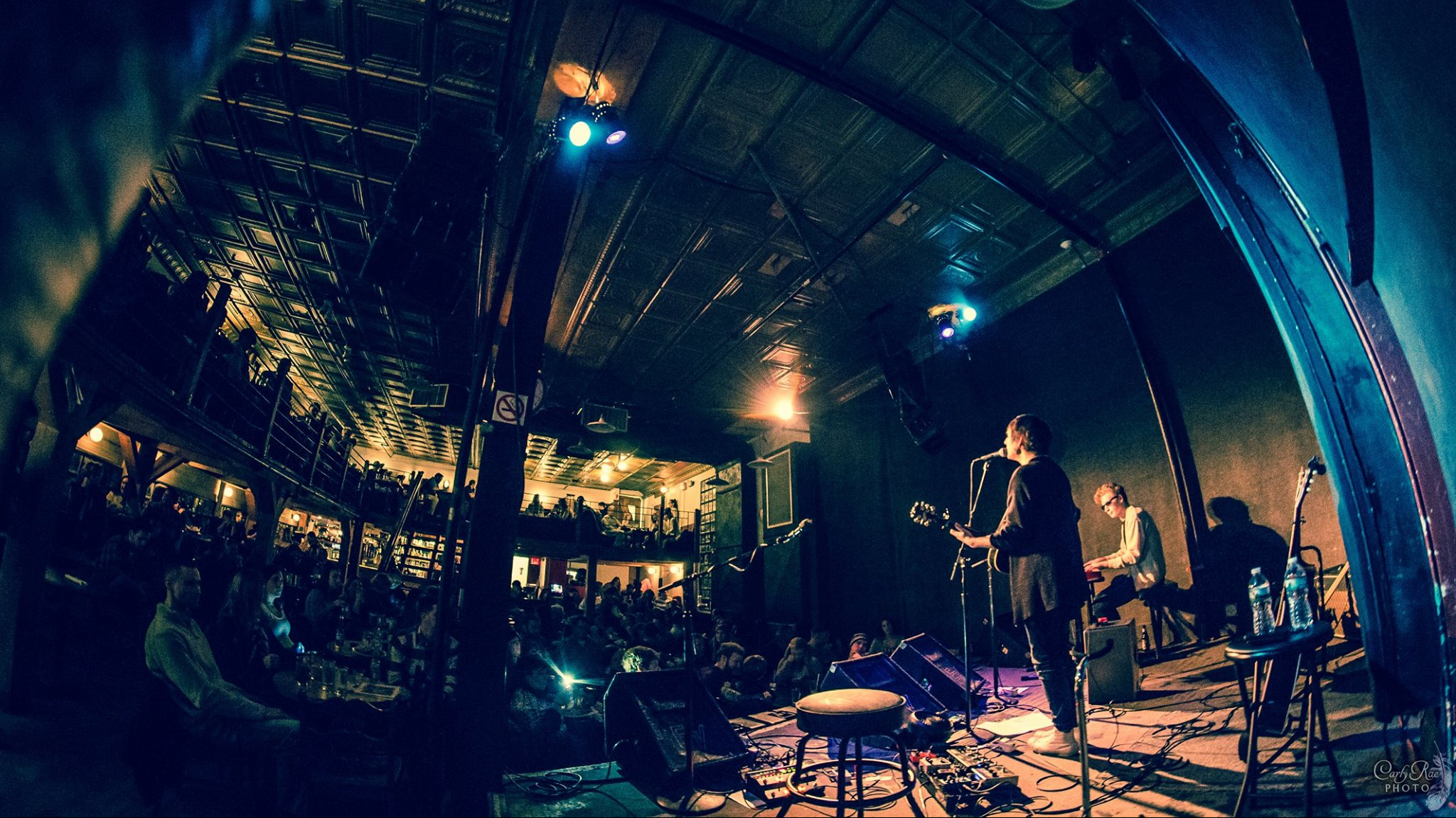
Will Dailey and his band at The Iron Horse on Friday, June 5 2026
Will Dailey makes emotionally honest American indie rock for people who value connection over noise. Rooted in American songwriting tradition but accountable to the present, his work explores how we talk, how we don’t, and what it costs either way. These are not songs chasing relevance or speed, they’re built for resonance, designed to age with the listener rather than spike in the moment.
Across seven albums, Dailey has built a career defined less by scale than by trust. His music treats listening as an act of care and the audience as partners in a long conversation. Albums functioning as chapters rather than content drops. Vulnerability here isn’t exposure; it’s craft. The songs don’t offer easy answers, but they stay with the questions long enough for something honest to surface.
Dailey’s approach to innovation mirrors his songwriting: deliberate, restrained, and human. Projects like The $10 Song—a one-time listening experience shared through a traveling Discman and handwritten journal—use limitation not as a stunt, but as a boundary. Scarcity becomes a way to restore value, ritual replaces noise, and technology is used intentionally rather than obediently.
Independence for Dailey is not isolation, but alignment. After stepping away from the major-label system, he reframed artist sovereignty as responsibility: protecting the work, the listener, and the relationship between them. Trust replaces scale as the core currency. These ethical practices have brought him on stage and studio with Eddie Vedder, Bruce Springsteen, Willie Nelson, Roger McGuinn, Steve Earle, Brandi Carlile, and T Bone Burnett; appearances on more than 50 television shows and films; performances at Farm Aid four times.
Often described as a Venn diagram of multiple genres with a rich vintage feel, Dailey’s music resists nostalgia as comfort. Instead, it interrogates the past, asking what made listening sacred and how to protect that now. His songs frequently act as proxies for conversations men weren’t taught to have, making room for tenderness without apology and honoring communication as an act of courage.
This is music that stays—long after the moment passes, long after the platforms change.